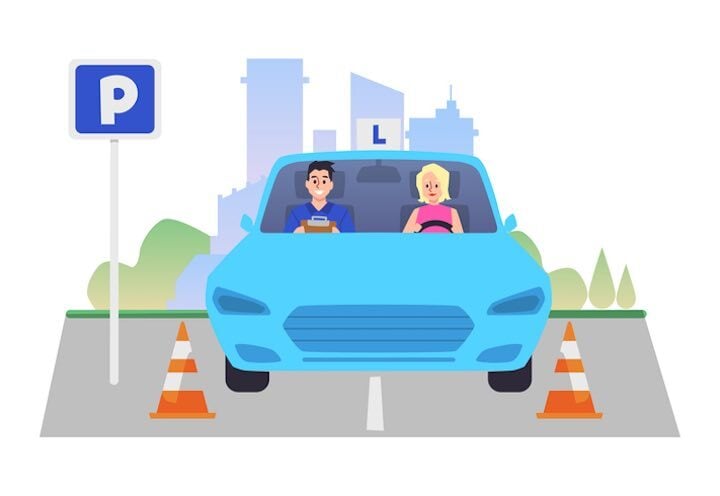
If you feel nervous before a driving lesson, you are not alone. Many new drivers ask the same quiet questions: “What if I mess up?” “What will the instructor expect?” “Will I be judged?”
Parents may have their own worries, too. They want to know their teen will be treated with patience and taught in a way that builds real safety, not just test-day confidence.
What Happens During a Professional Driving Lesson? A Step-by-Step GuideProfessional driving lessons are not meant to embarrass you or rush you. They're built to meet you where you are.
Maybe you are a teen learning for the first time. Maybe you are an adult who has waited years to drive. Maybe you had a bad experience before and want a calmer way to learn. A good instructor starts with your comfort level, then helps you build skill one step at a time.
This matters because driving is a serious responsibility. The CDC says motor vehicle crashes are the leading cause of death for U.S. teens. NHTSA also notes that motor vehicle crashes are a leading cause of death for 15- to 18-year-olds in the United States.
Inexperience, distraction, speed, passengers, and not using seat belts can all raise the risk.
Pacific Driver Education serves teens, adults, and parents in the Portland metro area with DMV- and ODOT-accredited instruction focused on low-risk driving habits.
Before the Lesson: Get Ready to Drive
A driving lesson usually starts before the car moves. Your instructor may ask about your driving experience, your goals, and how comfortable you feel behind the wheel.
They may ask whether you have driven in parking lots, quiet neighborhoods, busy streets, or highways. They may also ask what you want to work on, such as parking, lane changes, speed control, or getting ready for a drive test.
This is also the right time to share any fears or concerns. You can say, “I get nervous around other cars,” “I’m worried about making turns,” or “I failed my test before and I don’t want to repeat the same mistakes.”
A calm instructor will use that information to plan the lesson, not to judge you. For adults, adult driving lessons can help make the experience feel respectful and clear. For teens, this same calm approach can make learning feel less overwhelming.
The instructor will also check basic requirements. You may need a valid permit or license for each lesson. The lesson plan may depend on your skill level, state rules, your budget, and the type of course you are taking.
If you are comparing options, it can help to understand driving lesson costs before choosing a program.
Some programs include online driver education, in-car lessons, and a DMV road test. For example, one current course option includes four 90-minute driving lessons, online learning, and a DMV road test.
Before driving, you will also review the vehicle. This may include adjusting the seat, setting the mirrors, finding the turn signals, checking the pedals, learning the steering position, and understanding basic safety features.
These small steps can help you feel more in control. They also build habits you will use every time you drive.
For parents of teen drivers, the start of the lesson can be a helpful time to align expectations. If you are still comparing programs, knowing what to look for in a teen driver’s ed course can help you choose instruction that is structured, safe, and age-appropriate.
A professional instructor can explain what the teen is ready to practice, what still needs support, and how parents can help between lessons.
In Oregon, teen driver education courses approved by ODOT follow state standards. Teens who complete an approved course may apply with 50 hours of practice drive time, while teens who do not complete an approved course must show 100 hours before applying for a license.
Step 1: Start in a Safe, Low-Pressure Setting
Most lessons do not begin on the hardest road in town. If you are new or nervous, the instructor may start in a parking lot, a quiet street, or a low-traffic area. This gives you space to get used to the vehicle without too much pressure.
The goal is not to be perfect. The goal is to feel the car, understand your surroundings, and practice safe habits from the start.
Early skills may include starting the car, moving forward, stopping smoothly, turning, checking mirrors, steering through corners, and keeping the car centered in the lane.
You may also practice scanning, which means looking ahead, to the sides, and in your mirrors so you can notice changes early. These basics may seem simple, but they are the foundation for safe driving.
A good instructor will give clear directions before you need to act. Instead of surprising you with fast commands, they may say, “At the next stop sign, we’ll turn right,” or “When it is safe, ease off the brake and move forward.”
This gives your brain time to process what is happening. That matters because new drivers are still learning how to handle the car and read the road at the same time.
Mistakes are part of learning. You may brake too hard, turn too wide, forget a mirror check, or feel unsure at a stop sign. A professional instructor should not shame you for that.
Instead, they should help you understand what happened and how to do it better next time. A private driving lesson gives you a safe place to build better habits before you drive alone.
Step 2: Build Core Driving Skills
After you are comfortable with the basics, the lesson will move into core driving skills. These are the skills every driver needs, whether they are preparing for a DMV test, driving to school, commuting to work, or helping with family errands.
Common skills include turning, steering control, speed control, lane position, lane changes, right-of-way, parking, following distance, mirror checks, blind spot checks, and defensive driving.
You may practice one skill many times, or you may work on several skills during one drive. The lesson should match your readiness.
The instructor may explain not only what to do, but why it matters. For example, checking a blind spot is not just a test step. It helps you see a person, bike, motorcycle, or car that your mirrors may not show.
Following distance is not just a rule. It gives you more time to react if the car ahead brakes suddenly. Smooth braking is not just about comfort. It helps keep the car stable and gives drivers behind you a clearer signal.
This “why” is important. The AAA Foundation’s Traffic Safety Culture Index shows that many drivers know risky behaviors are dangerous, yet some still report doing them.
In the 2023 report, 93% of drivers said texting or emailing on a hand-held phone was very or extremely dangerous, but 27% still reported sending a text or email while driving in the past 30 days. These risky driving trends show why lessons should help students understand real risk, not just memorize rules.
Core skills are also where students start to build confidence. You may notice that a turn that felt scary at first starts to feel normal after several tries.
You may begin to understand how much space you need to park or how early you should slow down before a turn. These are signs of progress. They do not happen all at once, but they do happen with practice.
Step 3: Practice Real-World Situations
Once the student is ready, the instructor may move into more real-world driving. This could include busier streets, traffic lights, multi-lane roads, school zones, railroad crossings, neighborhood routes, or areas with more pedestrians and cyclists.
The instructor will decide when to add these challenges based on the student’s skill and comfort level.
Real-world practice helps students learn how driving decisions connect. For example, a simple right turn may include checking mirrors, slowing early, using a signal, watching for people in the crosswalk, judging the gap in traffic, turning into the correct lane, and adjusting speed after the turn.
For a new driver, that is a lot to manage. A professional instructor breaks the process into smaller steps.
Students may also practice route planning. This means thinking ahead about where to turn, which lane to use, how to handle a busy intersection, and when to slow down.
Planning lowers stress because you are not making every choice at the last second. It also helps students learn that safe driving starts before the car reaches the hard part.
For teens, this stage can help bridge the gap between parent-supervised practice and independent driving.
For adults, it can help make daily routes feel more possible, such as driving to work, school, appointments, or the grocery store. Helpful parent driving guidance can also make at-home practice feel calmer and more productive.
Step 4: Manage Stress Behind the Wheel
Driving is not only a physical skill. It is also an emotional skill. Your hands, feet, and eyes matter, but so does your ability to stay calm, think clearly, and recover after a mistake. This is why the tone of a driving lesson matters so much.
Driving anxiety is common. A 2023 study in the Journal of Transport & Health found that about 80% of a 5,000-person sample reported at least a minimal level of driving anxiety. The same study noted that this anxiety can affect mobility, driving behavior, and well-being.
A calm instructor can help lower stress by using clear directions, short explanations, and simple corrections. Instead of listing five problems at once, they may focus on one change at a time.
For example: “Next time, start braking a little sooner,” or “Let’s check the mirror before we signal.” This kind of feedback is easier to use because it gives the student a clear next step.
Some instructors may also build in breathing pauses. If a student feels overwhelmed, the instructor may have them pull over safely, take a moment, and reset.
This is not failure. It is part of learning how to manage stress in a safe way. Over time, students learn that feeling nervous does not mean they cannot drive. It means they need support, practice, and a plan.
This can be especially helpful for adults learning later in life. Adult learners may carry pressure from work, family needs, past test failures, or years of avoiding the road.
They may feel embarrassed that they are learning “late,” even though there is no wrong age to learn. A respectful lesson helps adults feel capable instead of judged.
Teens can feel a different kind of pressure. They may want independence, but they may also worry about disappointing parents, failing a test, or looking nervous in front of an instructor.
Calm coaching helps students manage nervousness when learning and focus on the task instead of the fear. The message should be clear: you are learning, and learning takes time.
Step 5: Review Feedback and Plan Your Next Drive
At the end of the lesson, the instructor should review what went well and what needs more practice. This part matters. Without feedback, students may leave with only a feeling: “I did okay,” or “I messed up.” Good feedback turns the lesson into a clear plan.
The instructor may say what improved during the drive, such as smoother braking, better lane position, stronger mirror checks, or calmer turns. They may also name one or two focus areas for next time.
These might include scanning earlier, slowing down sooner, holding a steady speed, or practicing parking. The goal is to help the student understand progress without feeling defeated.
For parents, post-lesson feedback can be very helpful. It can show what to practice at home and what to avoid for now. For example, if a teen is still working on smooth turns, the parent can practice in quiet neighborhoods before moving to busier roads.
If the teen is ready for more challenge, the parent can choose routes with stop signs, school zones, or simple lane changes.
This also helps parents avoid over-coaching. Teens can become stressed when a parent gives too many directions at once.
A professional instructor’s feedback gives families a shared plan. Everyone knows what the student is working on, and practice time becomes more useful. With the right teen driving support, parents can help their teen practice without adding extra pressure.
Progress is built lesson by lesson. One drive may focus on basic control. Another may focus on intersections. Another may focus on parking or test prep. Each lesson adds another layer of skill. The student should leave knowing that they are not expected to master everything in one day.
Take the Next Step Toward Confident Driving
A professional driving lesson is not just about passing the drive test. It is about learning how to stay calm, make safe choices, and build skills one step at a time.
Now that you know what happens before, during, and after a lesson, the process may feel less unknown and more manageable. You can expect a lesson to start with your comfort level, move at a safe pace, and end with clear feedback you can use for your next drive.
Whether you are a teen learning for the first time, a parent helping your teen practice, or an adult ready to gain more independence, the right lesson can help you feel more prepared behind the wheel.
Pacific Driver Education helps students in the Portland metro area build confidence through patient instruction, structured practice, and support that meets each learner where they are.
When you are ready, you can book a driving lesson and take the next step toward becoming a safer, more confident driver.
Need more details before scheduling? You can learn more about in-person driving lessons or explore online driver education to find the course format that fits your goals, schedule, and experience level.